
📘 WS1C - WiFi to Serial with 1 Channel
Video Tutorial
RS232 Serial to WiFi Converter
1. Introduction
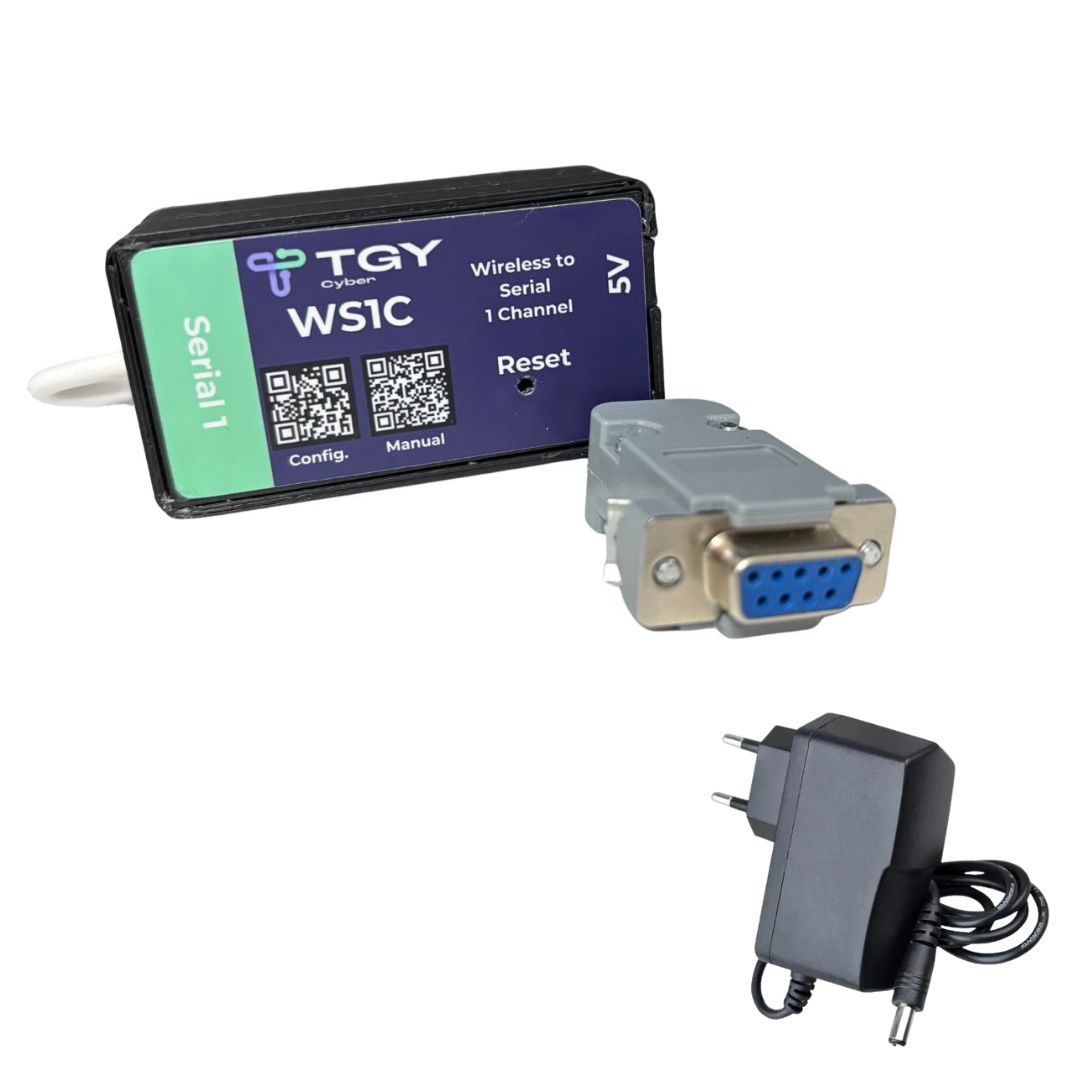
The WS1C is a Wireless to Serial converter with one RS232 serial port, which allows connecting serial devices (such as scales, printers, microterminals, etc.) and performing communication via Wi-Fi using the TCP/IP, HTTP via API and MQTT protocols.
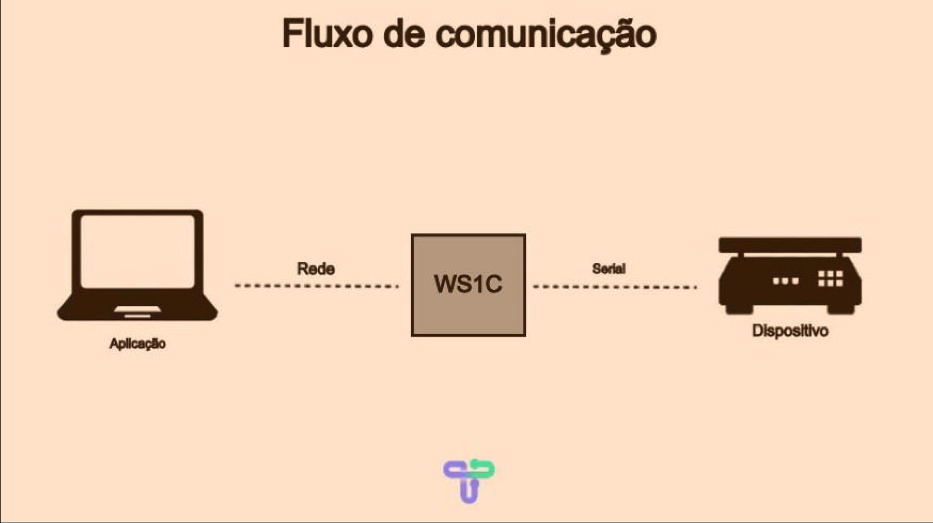
Data received from the network is transmitted to the serial port, and data sent by the serial port is transmitted over the network.
1.1 Installation
Connect the WS1C to a power supply with 5V 2A output.
The power supply included with the WS1C Kit operates at 127V or 220V, and the device will be ready for configuration and use.
2. Webserver
The WS1C is configured through an internal webserver.
To access it, simply connect to the network created by the device and open the browser.
2.1 Connecting to the WS1C network
- On your computer or phone, open Wi-Fi settings.
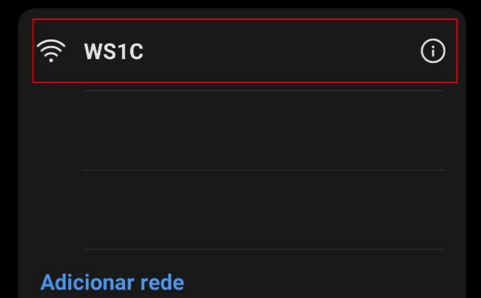
- Find the network named "WS1C" (no default password).
- Connect, the webserver will already be available for access.
2.2 Accessing the webserver
Open the browser and type the address:
http://10.10.10.10

⚠️ Make sure to use "http://" and not "https://", as the server does not support HTTPS.
2.3 Logging into the webserver
The login screen will display the following fields:
| Field | Default value |
|---|---|
| Username | admin |
| Password | admin |
3. Configuring the device
The webserver has five sections:
- System configuration
- Serial port configuration
- General configuration
- Status view
- Protocol configuration
3.1 System configuration
In this section you can adjust:
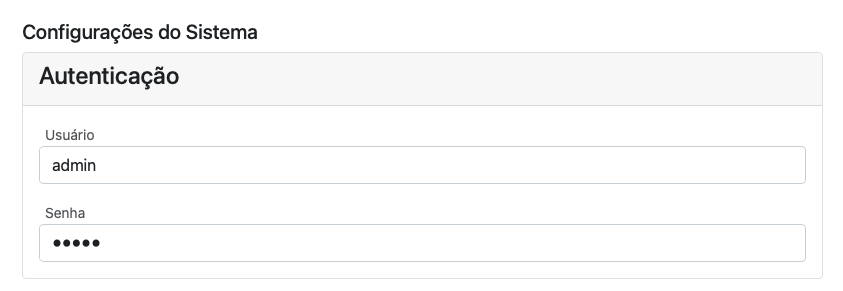
- Authentication data (webserver username and password)
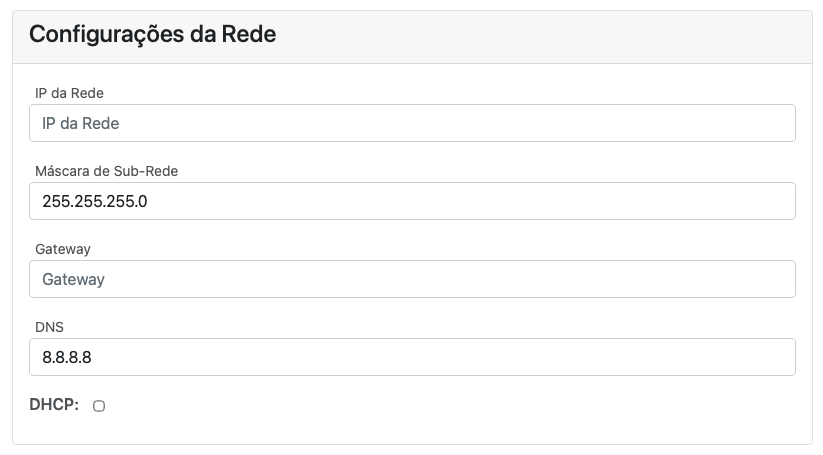
- LAN network settings (DHCP or manual)
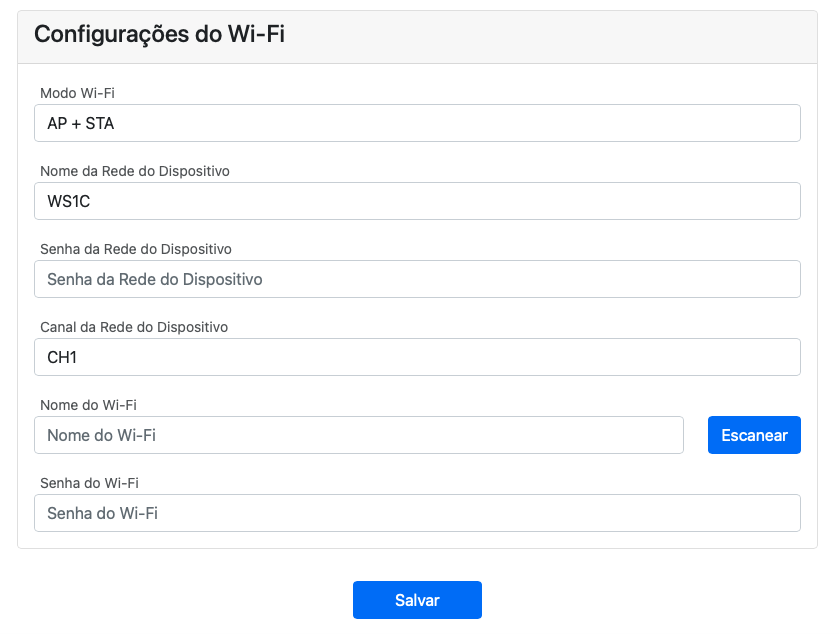
- Wi-Fi settings (mode and channel)
LAN Configuration
| Field | Description |
|---|---|
| LAN IP | Fixed IP address (if manual mode) |
| Subnet mask | Default: 255.255.255.0 |
| Gateway | Router address |
| DNS | Default: 8.8.8.8 (Google) |
| DHCP | Can be enabled or disabled |
⚠️ Disabled DHCP mode is recommended to avoid IP changes and communication loss.
Wi-Fi Configuration
| Field | Description |
|---|---|
| Wi-Fi Mode | AP + STA, AP, or STA |
| Network name | SSID displayed in Wi-Fi search |
| Password | Wi-Fi connection password |
| Channel | Default "1" or values between 1-13 |
📶 AP (Access Point): Creates the WS1C network for configuration.
📡 STA (Station): Connects the WS1C to the local Wi-Fi network.
🔁 AP + STA: Allows simultaneous configuration and operation (recommended).
| Channel | Frequency |
|---|---|
| 1 | 2.412 GHz |
| 2 | 2.417 GHz |
| 3 | 2.422 GHz |
| 4 | 2.427 GHz |
| 5 | 2.432 GHz |
| 6 | 2.437 GHz |
| 7 | 2.442 GHz |
| 8 | 2.447 GHz |
| 9 | 2.452 GHz |
| 10 | 2.457 GHz |
| 11 | 2.462 GHz |
| 12 | 2.467 GHz |
| 13 | 2.472 GHz |
3.2 Serial port configuration
The WS1C has one serial port (The "Serial 2" port only works with the WS2C model).
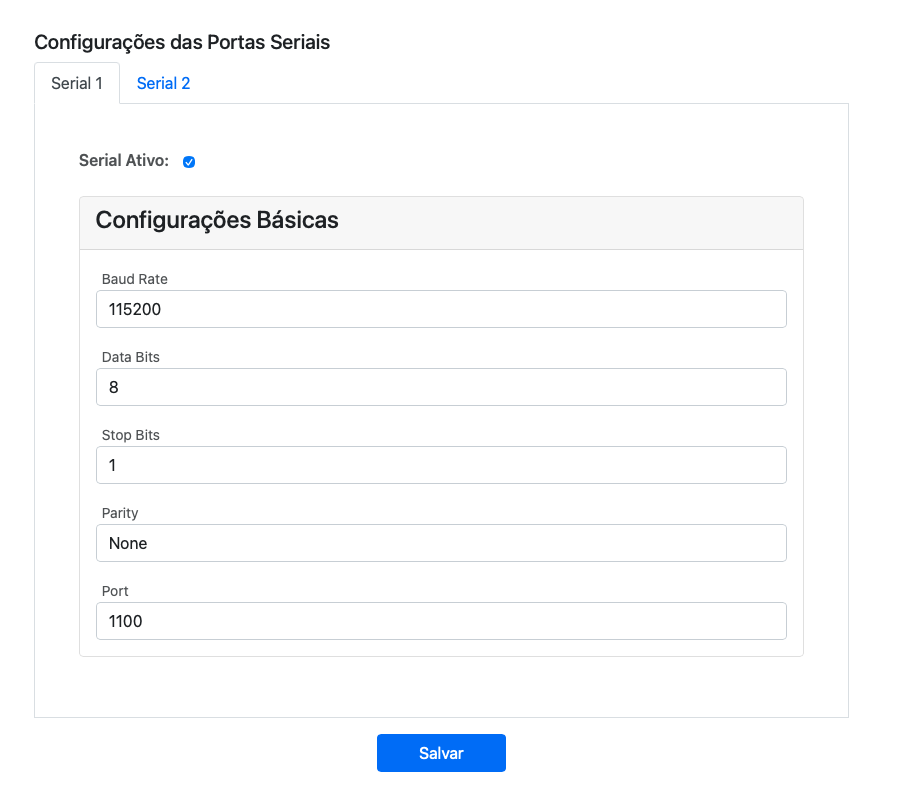
| Parameter | Description |
|---|---|
| Baud Rate | Communication speed. Supported values: 1200, 2400, 4800, 9600, 19200, 38400, 57600, 115200, 250000, 921600 |
| Data Bits | Data bits |
| Stop Bits | Stop bits |
| Parity | Parity type |
| Port | TCP/IP port associated with serial |
By default:
- Serial 1 → Port 1100
The serial port can be enabled or disabled as needed.
3.3 General configuration
This tab contains the basic system options:
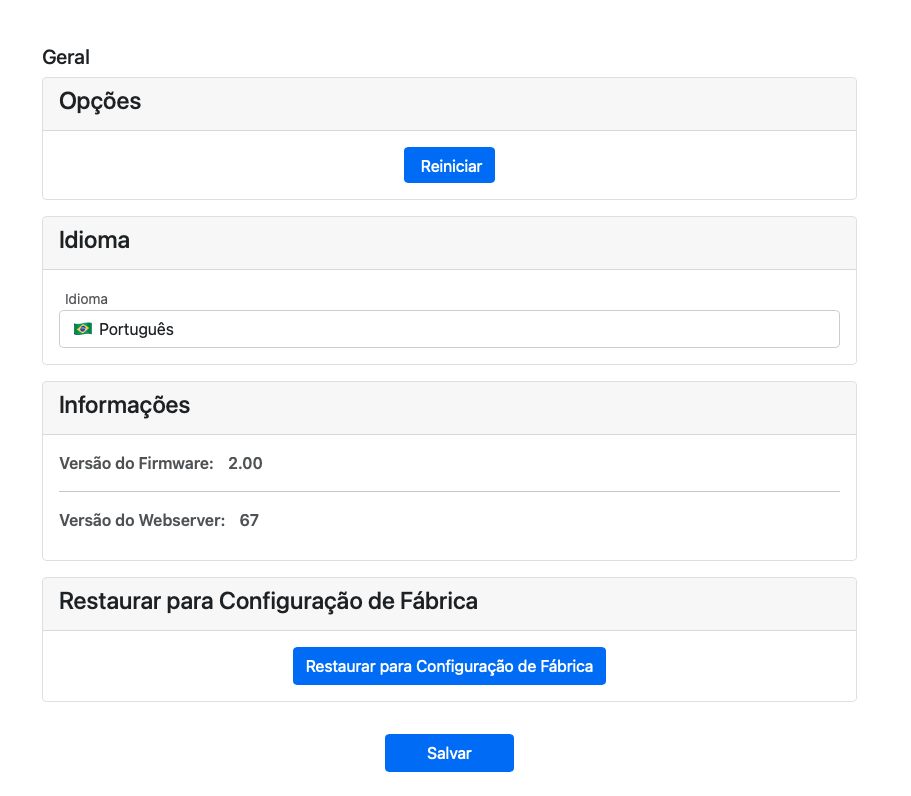
| Option | Function |
|---|---|
| Restart | Restarts the converter |
| Language | Portuguese / English |
| Factory Reset | Returns to original settings |
⚠️ Restoring the system erases all user settings.
3.4 Saving data
After configuring each section, click "Save".
A success message will be displayed at the top of the page.
Restart the ws1c to apply the changes.
⚠️ To restart the converter, quickly press the physical reset button once.
Attention: Do not hold the button for more than 10 seconds, as this will cause the converter to return to factory settings.
3.5 System Status
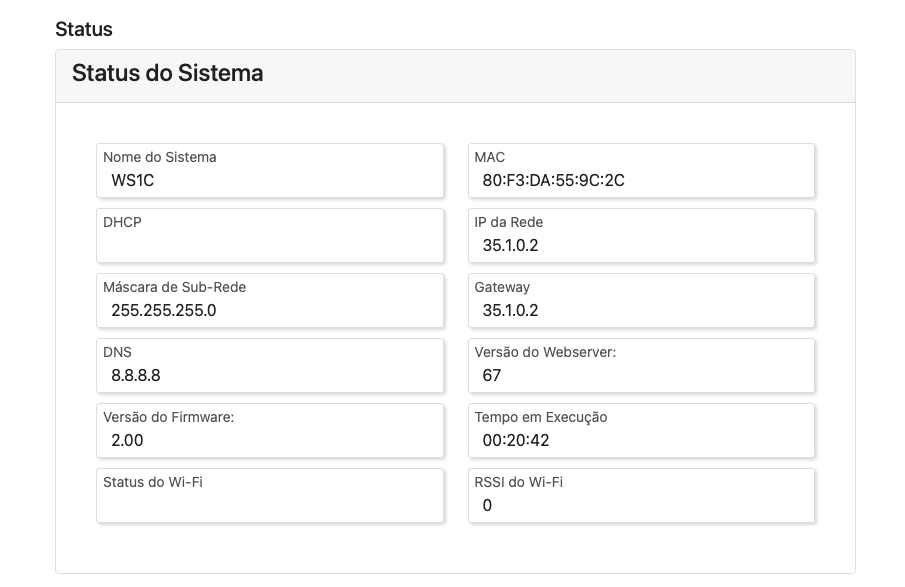
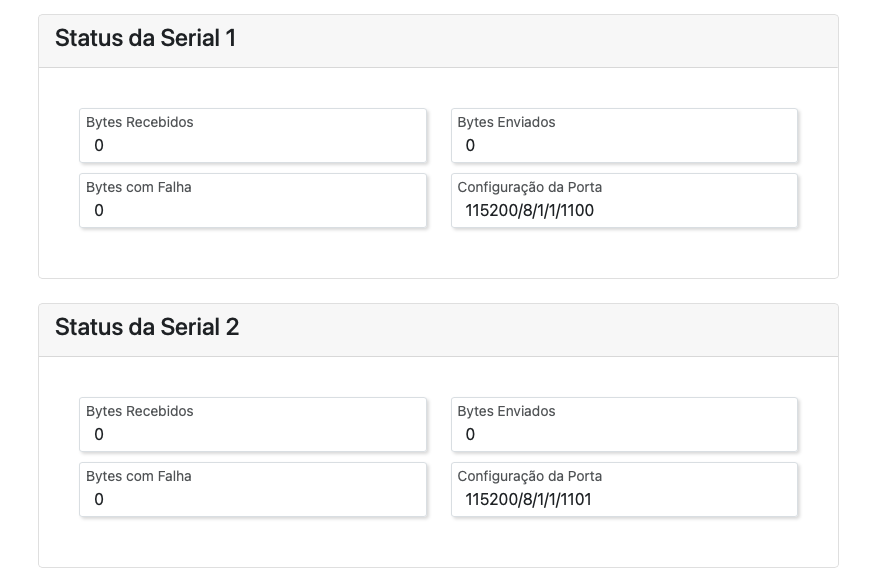
Displays information such as:
| Parameter | Example |
|---|---|
| System Name | WS1C |
| MAC | 70:B8:F6:5C:BE:BC |
| IP | 192.168.15.11 |
| Mask | 255.255.255.0 |
| Firmware Version | 1 |
| Webserver Version | 1 |
RSSI (Wi-Fi signal strength)
| Value (dBm) | Quality |
|---|---|
| 0 to -50 | Excellent |
| -51 to -60 | Good |
| -61 to -70 | Acceptable |
| -71 to -80 | Weak |
| -81 to -100 | Poor |
The total bytes sent and received by each serial port via the TCP/IP protocol is also displayed.
3.6 Protocols
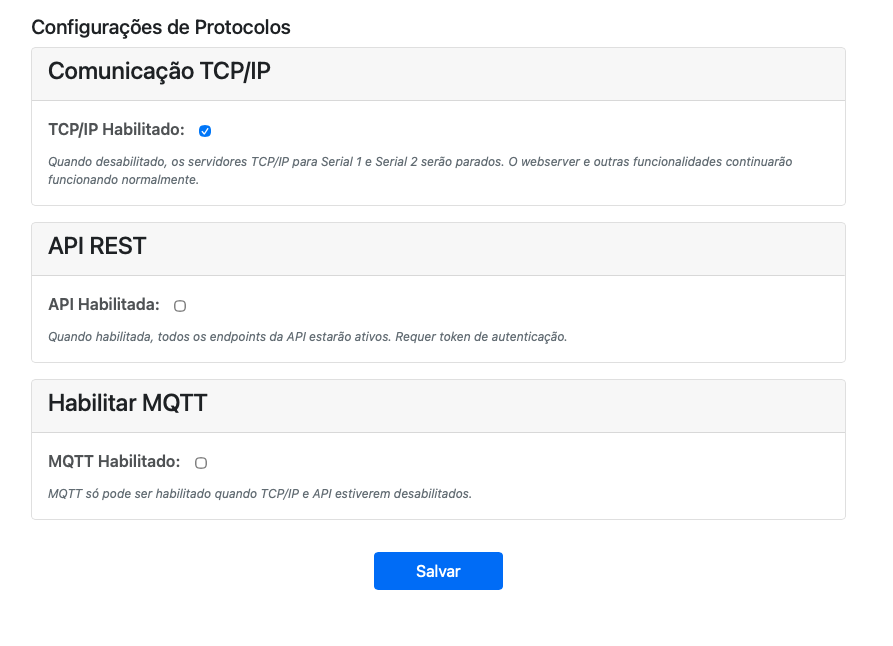
In this tab, you can enable or disable the communication protocols supported by ws1c: TCP/IP, API (HTTP) and MQTT.
To ensure greater system stability, it is recommended to enable only the protocols that are actually needed. By default, only the TCP/IP protocol is enabled. The MQTT protocol can only be enabled if both TCP/IP and API protocols are disabled.
4. Physical interface of the device
The WS1C has:
- 1 RS232 serial port (DB9 male or female)
- 1 multifunction button
- 1 indicator LED
4.1 Serial Port
The WS1C can be purchased with a male or female DB9 serial connector, according to user preference. Both versions follow the RS232 standard and use the same physical format (DB9).
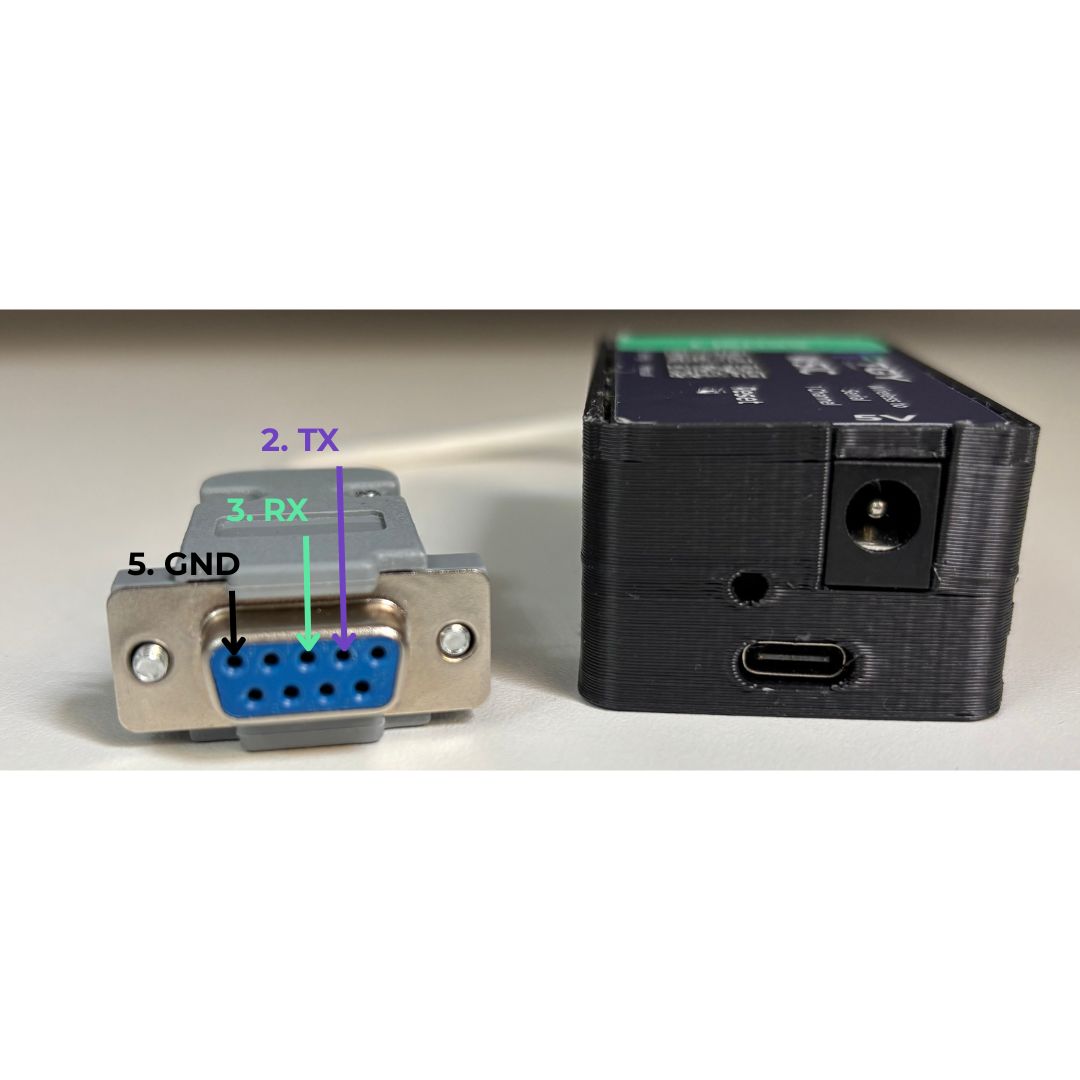
In the female model, only pins 2 (TXD), 3 (RXD) and 5 (GND) are connected, dedicated exclusively to data transmission and reception functions, in addition to grounding. The other pins have no electrical connection and are not used by the device.
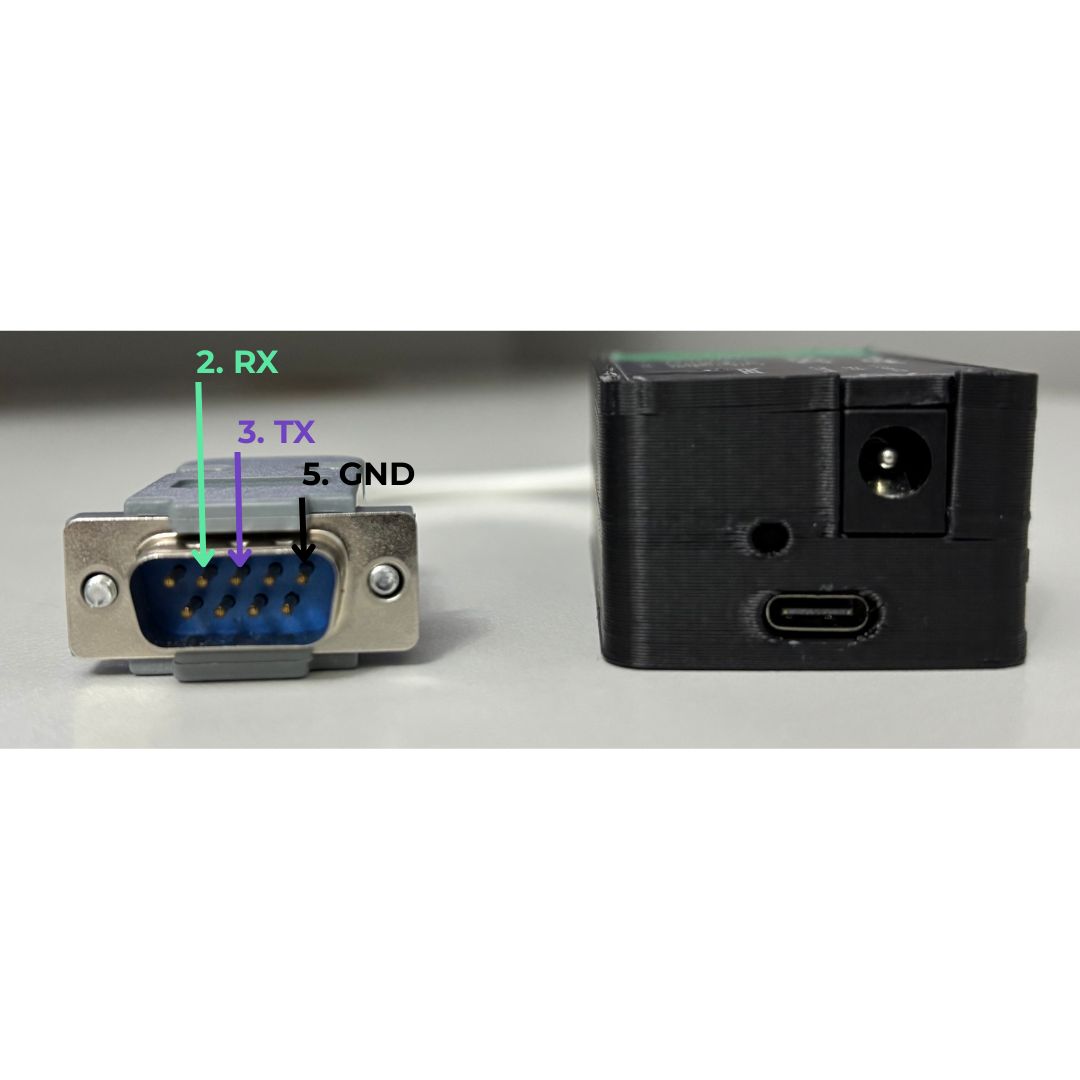
Similarly, the male version also has the sole purpose of data transfer and reception. However, its pinout differs, having pins 2 (RXD), 3 (TXD) and 5 (GND). The other pins continue to have no electrical connection.
4.2 Button
| Action | Function |
|---|---|
| Press quickly | Restarts the system |
| Hold pressed (10s) | Restores factory settings |
4.3 Indicator LED
| LED State | Meaning |
|---|---|
| Fast blinking (200ms) | Error — requires restart |
| Slow blinking (1s) | Normal operation |
| Irregular blinking | System updating |
| Fixed on | Initializing |
| Off | Turned off |
5. Firmware and Updates
The firmware version can be checked in the "General" tab of the webserver.
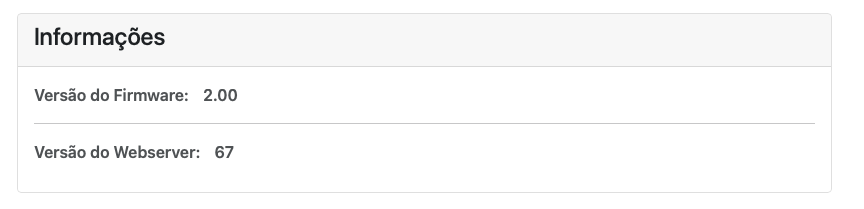
To update the firmware, download the Windows updater available here. Then, follow the step-by-step shown in the video below to ensure the update occurs without problems:
5.1 Testing Software
The TGY Cyber Suite is recommended software for testing and validating ws1c serial communication.
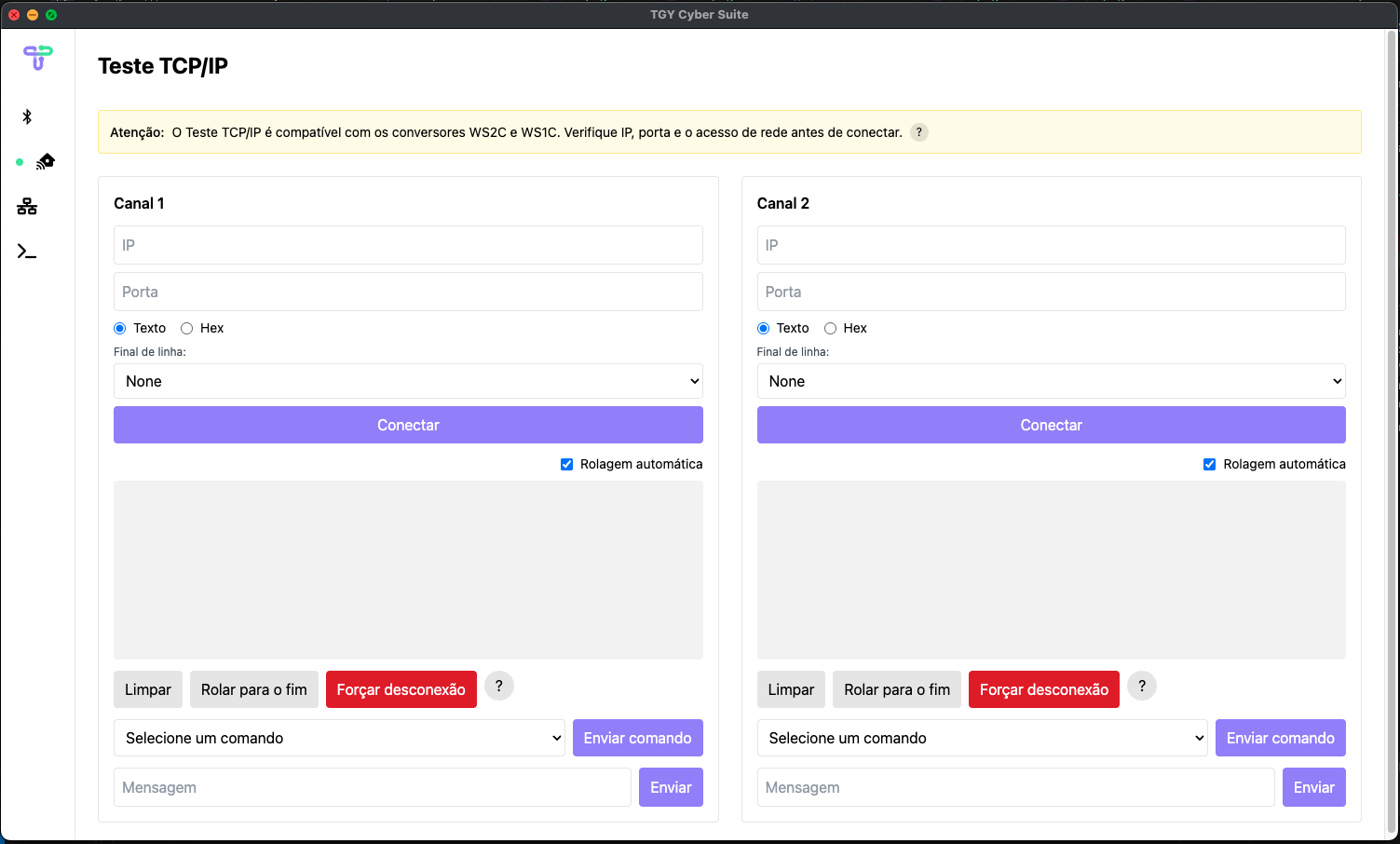
After downloading the software, you can check how to test the communication by watching the video below:
Steps:
- In the TGY Cyber Suite Software, access the TCP/IP Test tab
- Connect a loop connector to the WS1C as shown in the video.
- Enter the IP and serial port.
- Click Connect.
- Type a message and send.
- If there is loopback between pins 2 (RX) and 3 (TX), the text will return in the reception field.
6. API - Application Programming Interface
The WS1C, from firmware version 1.1, provides a REST API that facilitates integration with various external systems and applications.
API activation or deactivation can be performed in the protocols menu, as explained in section 3.6 of this manual.
Watch the video below to see how to use the API in practice:
⚠️ All requests require an authentication token (minimum 6 digits).
6.1 Endpoint: /post-serial-data
Returns data received by the serial port in JSON format.
Request example:
URL:
POST http://192.168.15.130/post-serial-data
Header:
Authorization: 123456
JSON Body:
{
  "port": 1100,
  "time": 2500,
  "command": ""
}
port: port to listen ontime: listening time (ms)command: optional command to send before listening
cURL:
curl -X POST http://192.168.15.130/post-serial-data \
  -H "Accept: application/json, text/plain, */*" \
  -H "Content-Type: application/json" \
  -H "Authorization: 123456" \
  -d '{"port":1100,"time":500,"command":"\u0005"}'
It is possible to validate the API functionality with the TGY Cyber Suite software
⚠️ It is recommended to use a listening time below 30 seconds to avoid blocking other functions.
7. MQTT - Message Queuing Telemetry Transport
From firmware version 2.0, the WS1C offers MQTT protocol support, providing an efficient solution for cloud application integration and IoT automation. Configuration to enable or disable MQTT can be easily performed through the protocols menu, as detailed in section 3.6 of this manual. Check the video below for a practical demonstration of how to use MQTT with your ws1c: